
Great Northern Tour
The Lapland of Finland, Norway and Sweden in a single journey: Inari, the centre of Sámi culture, Nordkapp, the northern tip of Europe, Tromsø among the fjords, Abisko with the fewest clouds, and a hotel made of ice. A loop that leaves from Rovaniemi and returns to Rovaniemi.
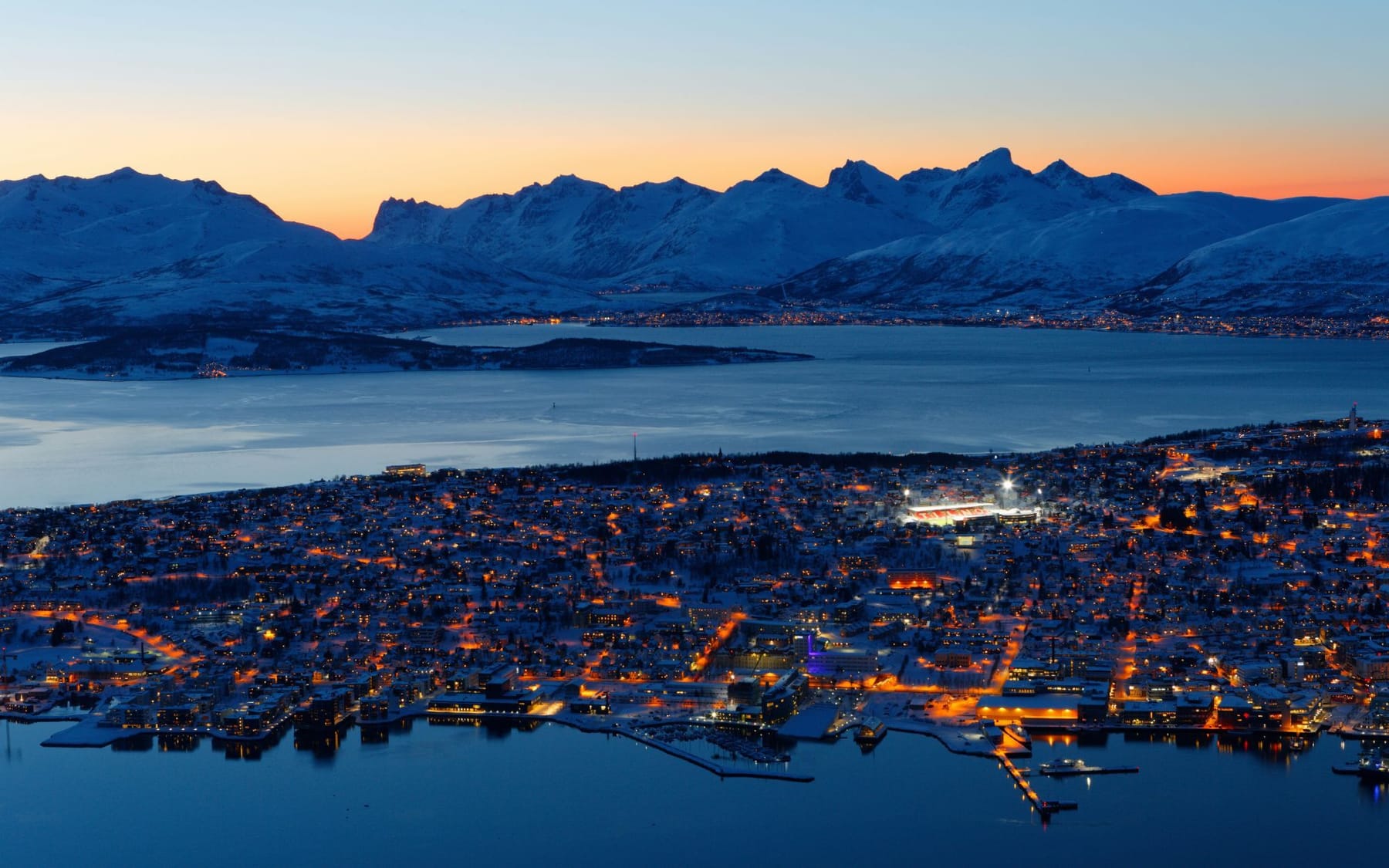
Why private groups only
On this journey the winter roads decide: the climb to Nordkapp is made in convoy, and mountain passes can close for hours in a storm. The route has to be rearranged every morning according to road conditions and the aurora forecast. I can only do this safely with a group I know and can make decisions with together.
That is why I do not sell the tour to everyone. Write your dates and the number of people for your family or group of friends, and let us plan the route, the number of days and the price specially for you.
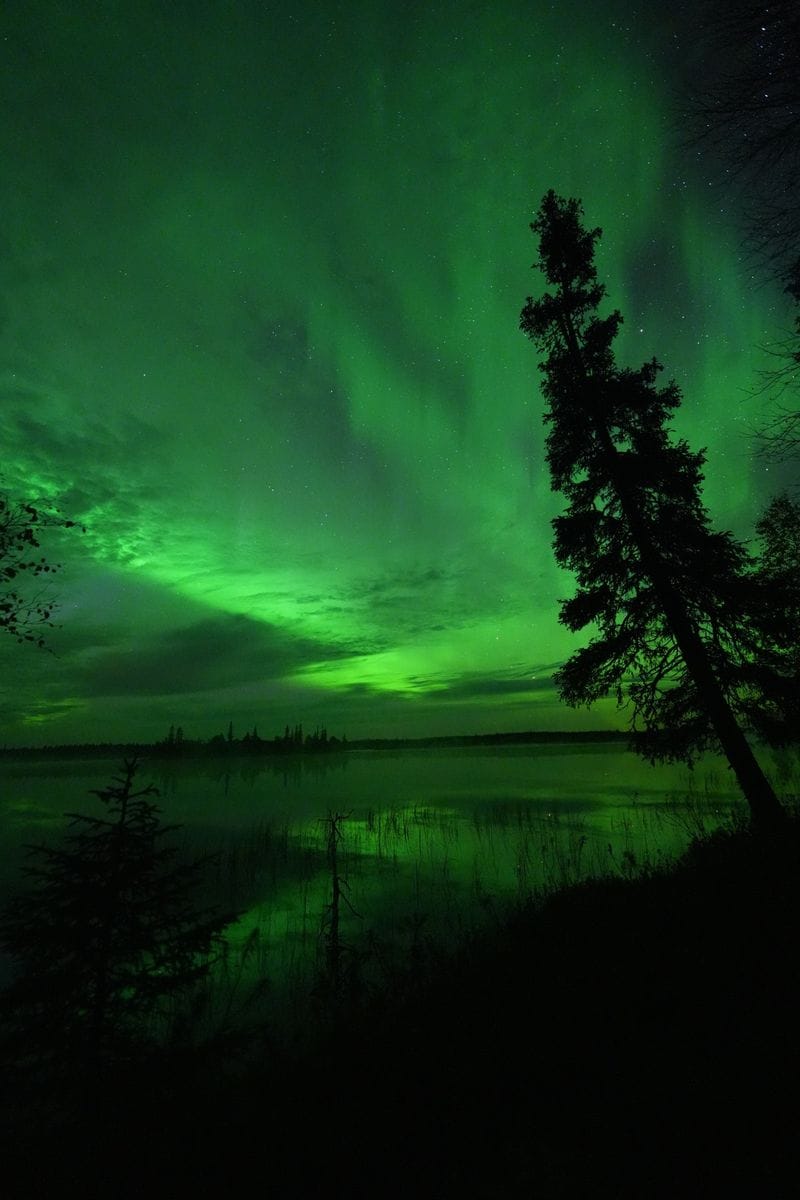
Sample route, day by day
The flow below is a sample for February–March. Daily driving ranges from 1 to 6.5 hours; the times are given lengthened for winter roads.
-
Day 1 · Rovaniemi
Welcome at the airport. In the evening the first northern lights hunt; whatever the weather brings for the rest of the journey, we do not miss the first chance.
-
Day 2 · Saariselkä
North, to the doorstep of Urho Kekkonen National Park. In the evening, the aurora on a wide horizon from Kaunispää hill.
-
Day 3 · Inari
The cultural centre of the Finnish Sámi: the Siida museum, Sajos, the building of the Sámi Parliament, and the frozen Lake Inari.
-
Day 4 · Alta
Into Norway from Karigasniemi. Late afternoon, a visit to the ice hotel at Sorrisniva, rebuilt every winter (open 20 December – 1 April).
-
Day 5 · Honningsvåg and Nordkapp
To the northern tip of Europe. In winter the Nordkapp plateau can only be reached with the road administration's convoy; with the evening convoy we go up to the plateau and look for the northern lights above the Barents Sea.
-
Day 6 · Alta
The Nordkapp road is a dead end; we return to Alta the same way. The titanium-clad tower of the Northern Lights Cathedral, and a free evening.
-
Day 7 · Tromsø
From the fjord shore to the capital of Northern Norway. The road goes through the tunnel opened in 2023 under the Kvænangsfjellet pass, which used to close often in winter.
-
Day 8 · Tromsø
A view over the city from above with the Fjellheisen cable car, the Arctic Cathedral, and an afternoon at a Sámi reindeer camp outside the city. The whale-watching season is November–January; if you come in December or January it can be added to this day.
-
Day 9 · Abisko
Into Sweden via Narvik. Abisko is a valley in the rain shadow of the mountains, with little cloud. At night, the Aurora Sky Station: we take the cable car up to 900 metres and wait for the northern lights from the mountain top (until 27 March).
-
Day 10 · Kiruna and Icehotel
We visit the Icehotel, made of ice, in Jukkasjärvi during the day. In Kiruna we see the wooden church that was moved 5 km in 2025 to make room for the mine.
-
Day 11 · Luleå
On the shore of the Gulf of Bothnia, the UNESCO World Heritage church village of Gammelstad. If winter conditions allow, the ice roads on the frozen sea.
-
Day 12 · Rovaniemi
Crossing into Finland from Haparanda–Tornio and on to Rovaniemi. Goodbyes and the airport.
Why a spare day is essential
The Nordkapp convoy or a mountain pass can close for a day because of a storm. I put one spare day in the programme; if we do not use it, there is an extra day in Tromsø or Abisko.
The short version: 8 days
A short loop of about 1,400 km that leaves out Nordkapp and Alta is also possible: Rovaniemi → Kilpisjärvi → Tromsø (2 nights) → Abisko → Kiruna and Icehotel → Rovaniemi. The Kilpisjärvi–Skibotn pass sometimes closes in winter or opens only with a convoy; the plan is kept flexible accordingly.
When to go
15 February – 15 March is the best-balanced period for this tour. The northern lights season is still open, daylight is enough for safe driving on the road, and the Sorrisniva ice hotel and the Aurora Sky Station are in service.
| Date | Tromsø | Nordkapp | Abisko | Rovaniemi |
|---|---|---|---|---|
| 21 December | 0 | 0 | 0 | 2.6 |
| 15 January | 1.5 | 0 | 3.1 | 4.4 |
| 1 February | 5.3 | 4.4 | 5.9 | 6.5 |
| 15 February | 7.6 | 7.1 | 7.9 | 8.3 |
| 1 March | 9.6 | 9.4 | 9.8 | 10.0 |
| 15 March | 11.7 | 11.6 | 11.7 | 11.7 |
Values are in hours: the time the sun stays above the horizon, calculated for a flat horizon. Mountains shorten this. Even in the polar night there are a few hours of twilight around midday.
- December–January: In Tromsø the sun does not rise from about 27 November to 15 January, and in Nordkapp until the end of January. Most of the driving is done in the dark. The only plus is the whale season in November–January.
- Late March and April: The days are long, but the Aurora Sky Station (27 March) and Sorrisniva (1 April) close, and the nights get short.
Winter roads
- Nordkapp: In September 2025 the Norwegian Public Roads Administration introduced a winter convoy between the Skarsvåg junction and the Nordkapp plateau. The convoy leaves at set times; in very bad weather the road can close completely. The convoy times are published again every season.
- Mountain passes: The Alta–Tromsø stretch of the E6, the Kilpisjärvi–Skibotn section of the E8 and the Abisko–Narvik section of the E10 can close temporarily in a storm or avalanche risk. Every morning we set off after checking the road condition services of Norway (vegvesen.no), Sweden (Trafikverket) and Finland (Fintraffic).
- Tyres: All three countries have winter tyre rules; in Northern Norway studded tyres are allowed from 16 October to 30 April. The vehicle is chosen according to this and to the permission to cross between the three countries.
- No ferry: There is no compulsory ferry crossing on this route; the island where Nordkapp lies is entered through a tunnel. I include the automatic road toll charges in Norway (AutoPASS) in the planning.
Visa, money, customs
- Visa: Finland, Norway and Sweden are in the Schengen area; one Schengen visa is enough to enter all three. Turkish citizens need a Schengen visa, as do citizens of many other non-EU countries. As a rule the application is made to the country where you will stay longest; on this route most nights are spent in Norway. Confirm the exact country with the visa application centre; for the application I send you the day-by-day programme in writing.
- Passport: There are usually no checks between the countries, but keep your passport with you at all times.
- Money: Finland uses the euro, Norway the Norwegian krone and Sweden the Swedish krona. Scandinavia works almost entirely by card; places such as the Icehotel do not accept cash. Have your card enabled for use abroad.
- Norway is expensive: In a mid-range restaurant a main course is over NOK 250 (~€21), and a coffee is NOK 35–65.
- Customs: Norway is in Schengen but not in the EU; there is a customs check on entry. The tourist allowance is, for example, 1 litre of spirits or 1.5 litres of wine or 2 litres of beer, and 200 cigarettes.
How to apply
This tour is run only for private, closed groups. To get in touch, please send an email: write the dates you have in mind, the number of people (adults and children), and how many days you can set aside. I will prepare the route, the number of days and the price for your group and send them to you.
Sources
Information checked in October 2026. Season dates, convoy times and prices may change every year.
- Statens vegvesen: Nordkapp winter convoy; Finnmark convoy times; Kvænangsfjell tunnel
- Sorrisniva ice hotel; STF Aurora Sky Station; Icehotel
- Visit Tromsø: winter; Fjellheisen; Arctic Cathedral
- LKAB: moving Kiruna Church; UNESCO: Gammelstad; Visit Luleå: ice roads
- Visit Norway: the polar night; Visit Norway: prices
- EU: Schengen visa rules for Turkish citizens; Norwegian customs: alcohol and tobacco allowances; AutoPASS: foreign-registered vehicles
- Traficom: winter tyres; Transportstyrelsen: winter tyres; Winter driving in Norway